

On this page
- What you need to know now
- Choose the reason supported by the facts
- Prepare the final return before assuming closure is complete
- Use current EmaraTax instructions and monitor requests
- Retain the evidence of the completed outcome
- A practical way forward
- Frequently asked questions
- Official sources & further reading
What you need to know now
Use the current EmaraTax deregistration workflow and prepare evidence explaining why the registration should end.
- A closure file should include outstanding tax obligations.
- The FTA may request further evidence.
- Save the approved effective date and certificate.
Choose the reason supported by the facts
Deregistration applications should explain why the VAT registration should end. A business that has ceased trading has a different evidence file from one that continues operating below the relevant threshold. Start by identifying the taxable person, its activities and the event relied on for the application.
Prepare a dated turnover schedule and documents supporting closure, sale or cessation where relevant. Explain any continuing invoices or outstanding contracts. If the company still owns assets or expects further transactions, include that information in the review rather than treating licence cancellation as proof that no VAT questions remain.
Prepare the final return before assuming closure is complete
An application does not by itself remove outstanding return or payment obligations. Reconcile the VAT account, identify missing submissions and review the treatment of stock and assets at the relevant time. The approved effective date determines the final-period analysis and should be checked against the application facts.
Use a closure workpaper that brings together the ledger balance, return position and payments. Record unresolved supplier credits or customer adjustments, and obtain advice where these affect the final VAT position. A clean reconciliation makes an information request easier to answer and helps avoid discovering a material item after the application has progressed.
Use current EmaraTax instructions and monitor requests
Follow the current FTA service workflow rather than an old screenshot or menu description. Submit the supporting evidence requested for the selected reason and retain the application reference. The FTA may ask for further information, so somebody needs to monitor the account and respond accurately.
Distinguish the application deadline from the authority’s estimated processing time. The current service card contains the relevant timings and may differ from older guidance reproduced below. If additional documents are requested, keep a copy of both the request and the exact response; a new attachment should be traceable to the question it answers.
Retain the evidence of the completed outcome
When the process is complete, save the FTA decision, effective date, final return, payment evidence and digital certificate in the closure file. Confirm that the business’s operational systems no longer issue documents using registration details inappropriately. Notify the staff responsible for billing and supplier records of the completed change.
Arrange continued access to records after commercial closure. A former employee’s personal mailbox should not be the only place where the final reconciliation can be found. Name a contact responsible for later tax correspondence, and keep the handover clear enough for a successor to understand what was submitted and approved.
YOUR NEXT STEPS
A practical way forward
- 01
Step 1
Reconcile the account and identify unfiled returns.
- 02
Step 2
Attach evidence supporting the reason for deregistration.
- 03
Step 3
Track the application and complete the final return.
CLEAR ANSWERS
Frequently asked questions
Is an old portal button name reliable today?
Use the present EmaraTax interface.
What proves the process is complete?
Retain the FTA decision and digital deregistration certificate.
Earlier article & background First published 6 January 2020 · retained for context
This earlier article is preserved for context. Its rates, deadlines, approvals and announcements may have been superseded. Use the current guidance and official references on this page for your next step.
Taxable persons/companies must apply for VAT De-registration if they fulfill any of the conditions laid down by the law.
- Cease making taxable supplies; or are still making taxable supplies but the value in the preceding 12 calendar months is less than the Voluntary Registration Threshold, must apply for de-registration within 20 business days from the occurrence of the event
- Are still making taxable supplies but the value in the previous 12 months was less than the Mandatory Registration Threshold; and, 12 months have elapsed since the date of registration if you were registered on a voluntary basis –may apply for a voluntary de-registration
VAT De-registration in UAE, How to do?
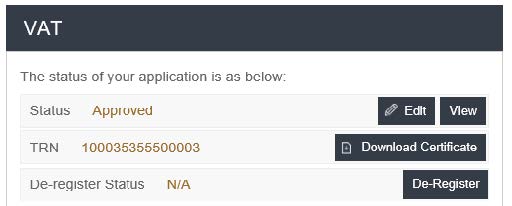
On the dashboard, against the VAT registration, click on the ‘De-Register’ button.
How do I complete the de-registration application form?
- Taxable Person Details are pre-populated in the de-registration application
- Provide the reasons and effective date for de-registration
- Please select from the dropdown list the basis you are de-registering for VAT, i.e.
- Business no longer making taxable supplies
- Business making taxable supplies, but below the Voluntary Threshold
- Business making taxable supplies, above the Voluntary Threshold, but below the Mandatory Threshold
- Please select from the dropdown list the basis you are de-registering for VAT, i.e.
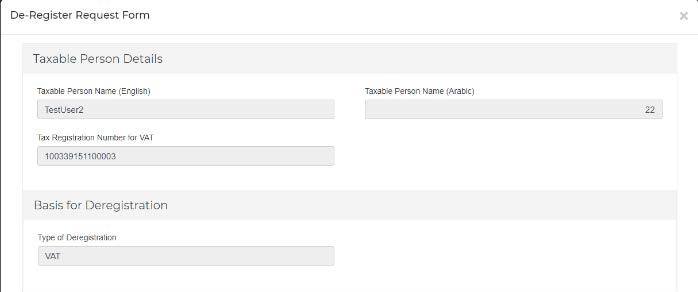
- Provide the details on the basis for the de-registration.
- The date from which the Taxable Person is required or eligible to de-register depends on the basis of the de-registration:
- the Business is no longer making taxable supplies,the date starting from which the Taxable Person stopped making taxable supplies
- the Business is making taxable supplies, but below the Voluntary Registration Threshold, the date starting from which the value of the Taxable Person’s taxable supplies no longer exceed the Voluntary Registration Threshold
- the Business is making taxable supplies, above the Voluntary Threshold, but below the Mandatory Registration Threshold, a preferred de-registration date
- any other reason, a relevant date you consider you are required to de-register
Upload all the relevant supporting documents by clicking on ‘Choose Files’.
Review and confirm the authorized signatory and declaration section of the application form before submission
It is important to update the email credentials for authorized signatory (where necessary) and confirm all the four declarations by ticking the check box next to each. Once you have completed the above, click on the ‘Submit’ button to proceed.
Once the de-registration request is submitted, the FTA shall approve or reject the request and notify the registrant accordingly. Further, the FTA may ask you to provide additional supporting documents
IMPORTANT: Please note, if the date of submission of this de-registration form is more than 20 business days from the date the Taxable Person is required to de-register then you will be subject to a late de-registration penalty of AED 10,000.
Once your application is submitted, the status of your application form will be amended to “pending”. You may check your application status in the dashboard from time to time.
Once the FTA confirms acceptance of your de-registration application form, you will be notified of the pre-approval. The status of your de-registration in the dashboard will be changed to ‘Pre-Approved’.
You may also be required to submit a final tax return which will be generated by the system in the “VAT returns” section. You will receive an email and an SMS notification informing you of the status of the application and requesting you to complete the payment of the outstanding liabilities.
Please note, you will not be deregistered unless you’ve paid all Tax and Administrative Penalties due and filed all Tax Returns including any outstanding returns as well as the final tax return.
Related : VAT DeRegistration in UAE
VERIFY THE DETAIL
Official sources & further reading
Source checks support this general guide. Your treatment depends on the facts, tax period and applicable legislation.